
Vinyl instead of VIP: Why listening bars are becoming the new hospitality phenomenon worldwide
In an age of constant sensory overload, a surprisingly quiet counter-movement is emerging. While clubs have become louder, faster, and more interchangeable, places are springing up around the world where people are consciously listening again. Listening bars, which originated in Japan, are currently experiencing an international boom and are quietly changing the concept of nightlife, gastronomy, and hospitality.
What initially appears to be a niche trend for audiophiles is increasingly developing into a cultural format between bar, living room, and design space. Here, music is not background noise, but the main attraction.
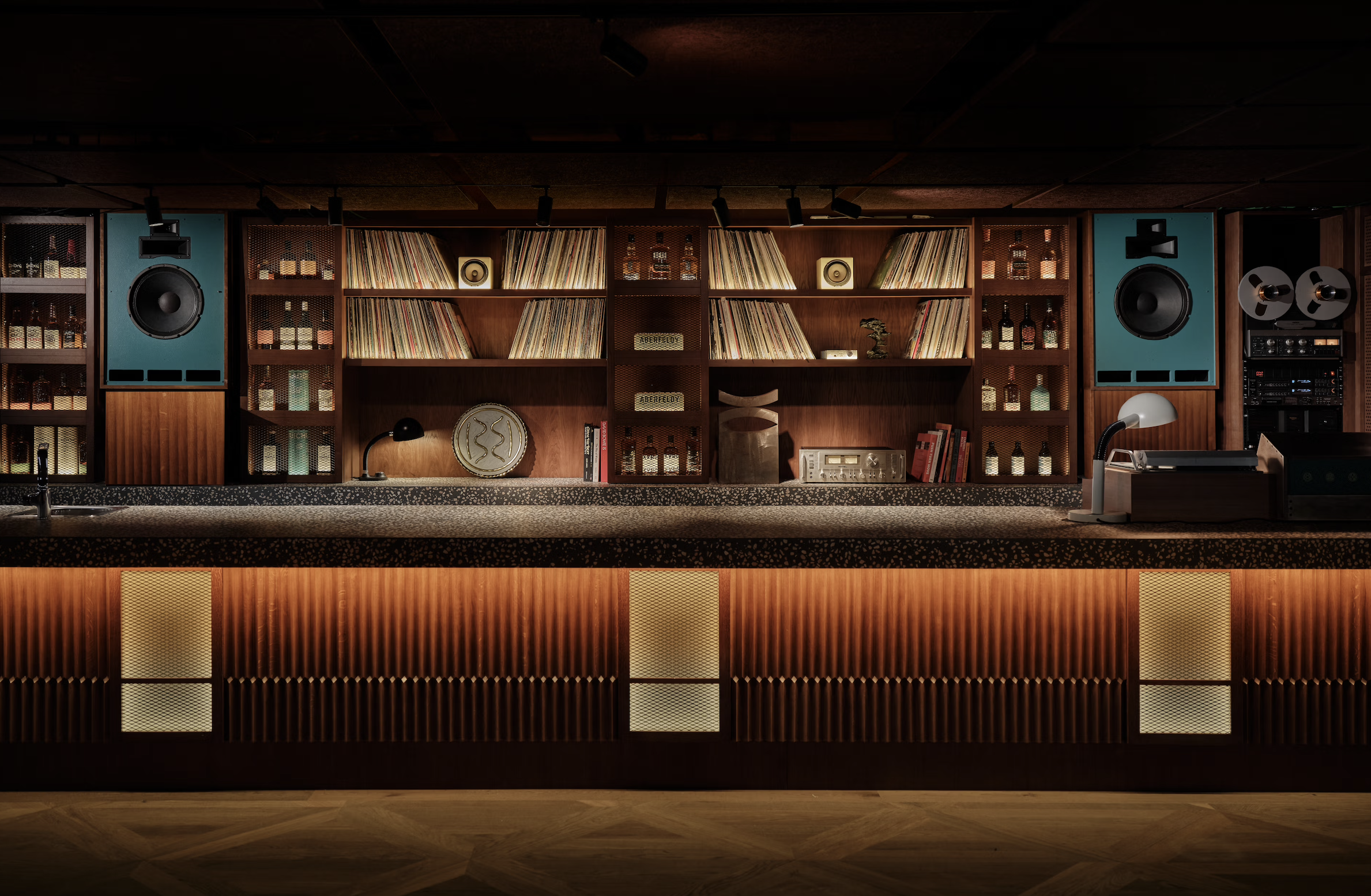
The Kissaten - Lisbon, Portugal
Key Takeaways
Listening bars shift nightlife from volume to attentiveness
The concept originated in Japanese "Ongaku Kissa" in the 1920s.
Gen Z seeks more meaningful social experiences instead of traditional club nights
Interior design, acoustics, and curation are becoming key hospitality tools
Listening bars demonstrate how the quality of the experience is becoming more important than the size of the event.
From Japanese music cafés to a global trend
The idea is not new. Back in 1926, Café Lion, one of the first music cafés where guests gathered specifically to listen to music, opened in Tokyo. These so-called Ongaku Kissa laid the foundation for today's listening bars.
Today, this concept is experiencing a renaissance worldwide. Younger generations in particular are consciously turning away from traditional club formats and seeking quieter, more intentional ways to experience music.
The change is also a reaction to an overstimulated digital environment. Listening bars function almost like analog counter-spaces: few screens, curated sound, minimalist architecture.
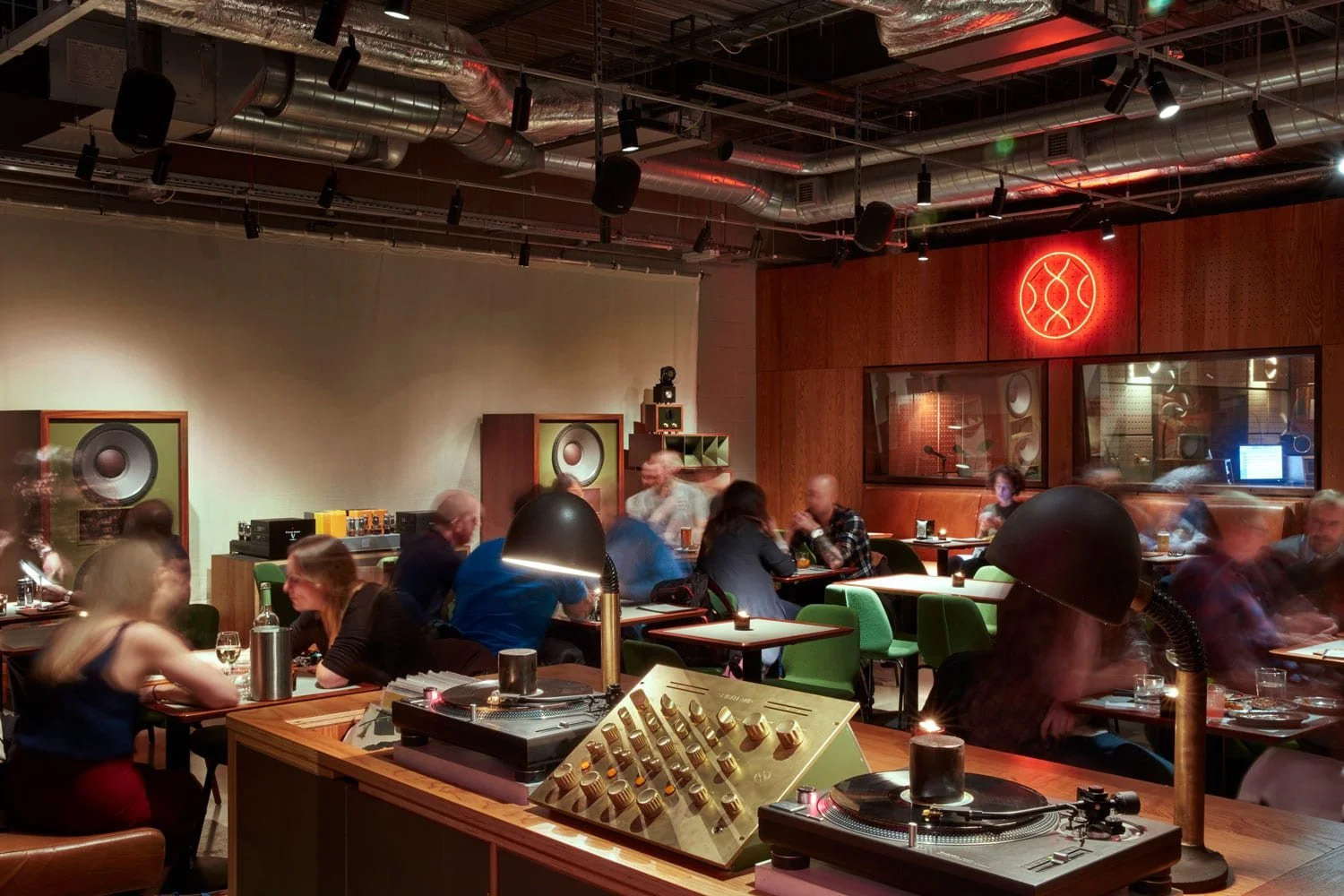
Spiritland Kings Cross - London, UK
Why listening bars are perfect for our times
Listening bars are more than just places to listen to music. They reflect a cultural shift.
Less performance, more presence
less mass, more atmosphere
Less event, more ritual
Architecturally, many rooms are reminiscent of hybrid typologies between living room, studio, and gallery. Materials absorb sound, lighting remains dimmed, and seating positions are deliberately chosen. Music becomes a shared experience rather than background noise. Listening bars thus perfectly capture the zeitgeist of a generation that values quality over quantity.
Hospitality reimagined: Sound as a design element
This trend is particularly interesting for the hotel and restaurant industry. Listening bars show that atmosphere is not only created by interior design, but also by curated sensory experiences. Sound becomes part of the brand identity.
Many operators are therefore investing more heavily in:
High-end sound systems
curated vinyl collections
acoustic room planning
minimalist, cozy interiors
The result is places where guests stay longer, consume more consciously, and build emotional connections.
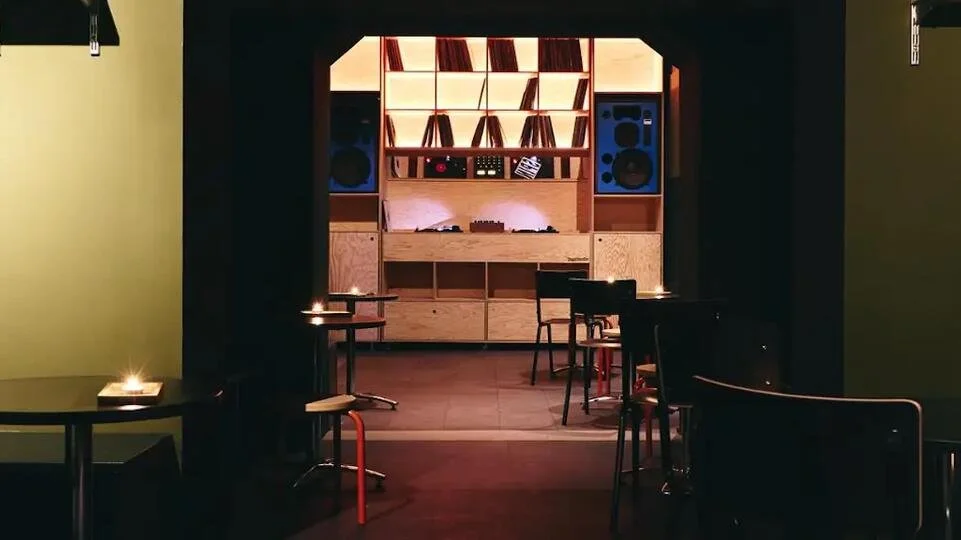
SPIN - Munich, Germany
Why hotels should pay attention right now
Listening bars exemplify the direction in which hospitality is evolving. Not bigger, not louder, but more conscious. While many concepts have long focused on expansion, events, and maximum capacity, today the quality of the moment is increasingly taking center stage.
Hotels are therefore competing less and less on the basis of facilities alone, but rather on the basis of atmosphere. Rooms that evoke emotions remain in the memory and create a bond that lasts far beyond the stay. This is precisely where curated sound becomes a previously underestimated differentiating factor. Music often influences the perception, tempo, and mood of a place more strongly than visual design, without being consciously perceived.
Listening bars demonstrate how consciously designed soundscapes can prolong stays and promote social interaction. This opens up the possibility for hotels to rethink public areas, not as mere transit zones, but as places with their own identity. The listening bar is therefore less a bar concept than an attitude. Hospitality is created through attention, curated details, and spaces that do not overwhelm but invite guests to stay.

LB's Record Bar - Melbourne, Australia
Our conclusion: From nightlife to listening experience
Perhaps the success of listening bars is less a music trend than a cultural signal. In an age of constant acceleration, places that enable conscious attention are gaining in importance. People are once again seeking spaces where the focus is not on activity but on atmosphere. Hospitality is thus slowly shifting from event to experience, from consumption to presence.
Listening bars demonstrate that quality today often lies in reduction. Less volume, less distraction, less staging. Instead, places are emerging that make an impact through curated details: sound, light, materiality, and rhythm. Music becomes the connecting element between strangers and creates a form of community that does not need to be organized, but arises intuitively.
This could be an important insight for the future of hospitality. Guests do not necessarily expect more offerings, but rather more meaningful experiences. Spaces are increasingly being evaluated based on how they feel, not just what they offer. Sound, acoustics, and consciously designed atmospheres could therefore become just as important a design element as architecture or service.
The Listening Bar is therefore less a concept than an attitude. It shows how hospitality evolves when attention becomes a luxury. Perhaps the most exciting places in the coming years will not be the loudest, but those that manage to make people truly arrive for a moment.