Hospitality as a mindset: How Vitra thinks about design, sustainability, and the future of hotels
Hotels are increasingly changing as spaces. Today, they are places of work, social meeting points, retreats, and cultural stages all at once. Corina Meroth, Director of Hospitality at Vitra, explains the role design plays in this and why hospitality is less a market segment and more an attitude. The conversation shows how the requirements of hotel operators are shifting, why multifunctional spaces are gaining in importance, and why sustainable design begins as early as the development phase.
Brandcraft Key Takeaways
Hospitality is increasingly evolving from a market segment to an attitude.
Hotels are increasingly becoming social and cultural venues for guests and local communities.
Design subtly influences behavior and controls encounters, retreats, and the quality of stay.
Sustainability primarily arises in product development and material selection.
Future-proof hotels think more in terms of life cycles than short-term investments.
About the person and Vitra
Corina Meroth is Director of Hospitality at Vitra and is responsible for the strategic development of the hospitality segment of the international design brand. With a background in product development, materials, and system design, she combines design perspectives with the operational requirements of hotel and commercial projects worldwide.
Vitra has been involved in international hospitality projects as well as public and hybrid spaces for decades and increasingly sees design as a connecting element between architecture, use, and social interaction.

Corina Meroth, Director of Hospitality at Vitra
Brandcraft: How important is the hospitality industry to Vitra today, and are there any specific focus categories within this segment?
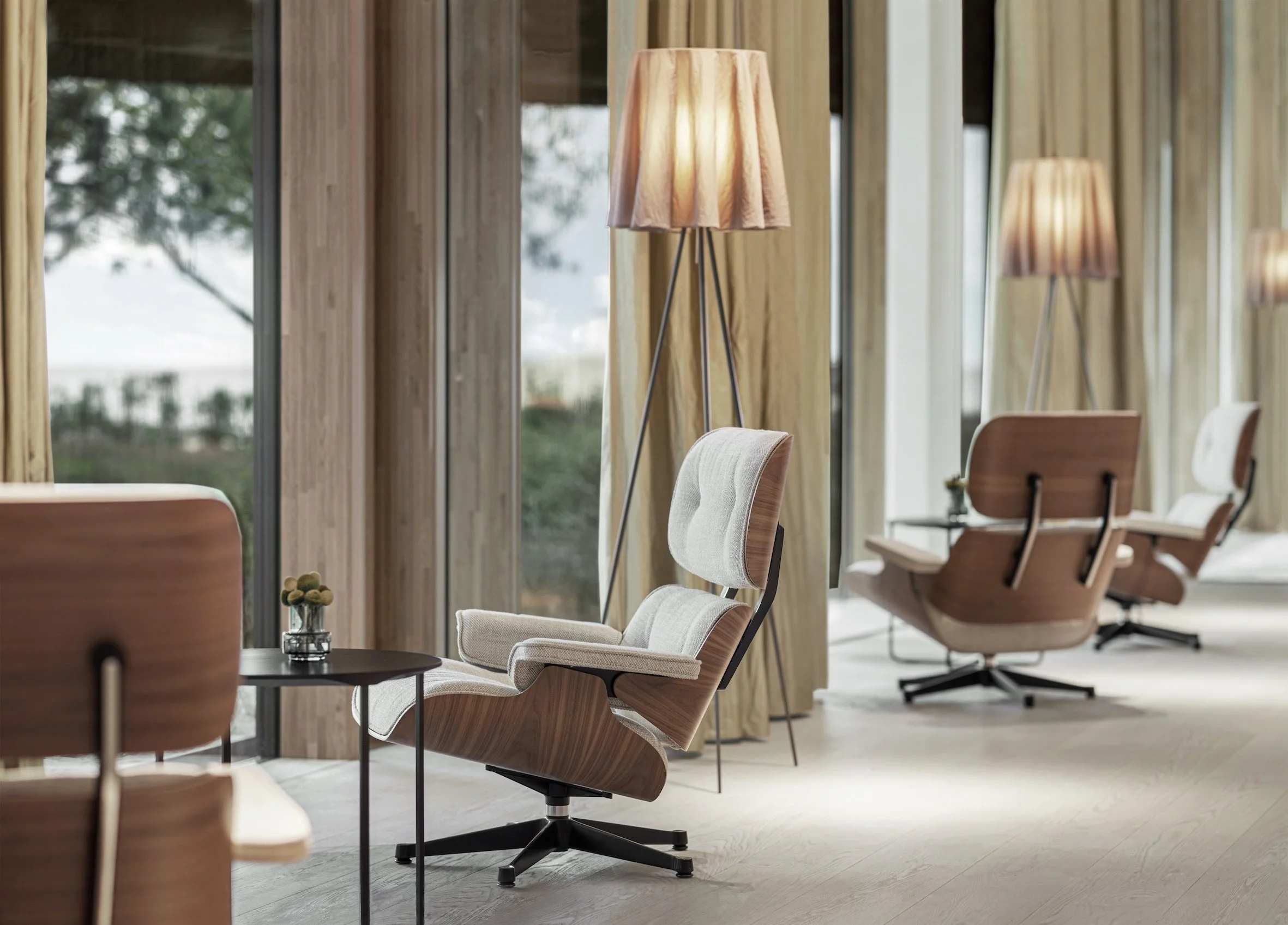
Corina Meroth: Vitra products have been used in international hotel projects for many years, not least the iconic designs by Charles and Ray Eames, which are frequently encountered in this context. At the same time, many people are unaware of just how broad our range for this segment actually is today. With our portfolio of products, systems, and services, we can cover far more than just the delivery of individual pieces of furniture.
From Vitra's perspective, we see hospitality less as a traditional market segment and more as a mindset that can be applied to different spaces and usage scenarios. This ranges from hotels in the narrower sense to public, semi-public, and hybrid contexts.
The quote "Be a good host" by Charles Eames symbolizes this attitude. It aptly describes how we approach design today. Attentive, people-centered, and with the aim of creating spaces where people naturally feel welcome, whether for a brief moment or a longer period of their lives.
Brandcraft: How have the needs of hospitality customers changed in recent years, and have there been any adjustments to the various usage concepts?
Corina Meroth: We are currently seeing two key developments. On the one hand, the lines between different uses are becoming increasingly blurred. Hotel guests no longer work, study, and relax in clearly separate times or spaces. At the same time, demographic change is leading to greater mixing of target groups. Hotels are increasingly becoming social venues.
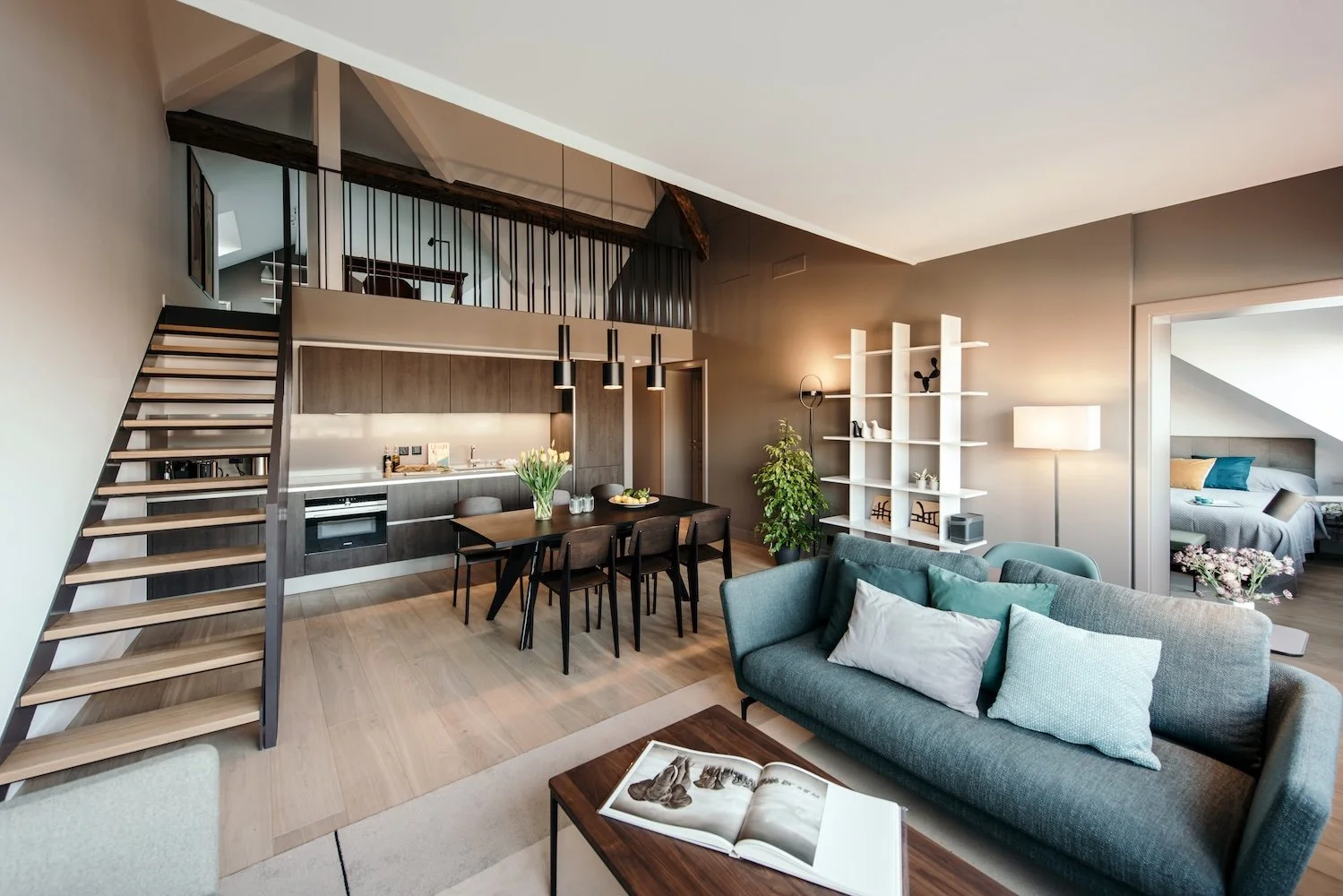
On the other hand, rising costs and a shortage of skilled workers are forcing operators to rethink their use of space. Today, efficiency is achieved less through densification and more through multiple use. Concepts such as CitizenM initiated this change almost two decades ago by placing the focus on communal areas.
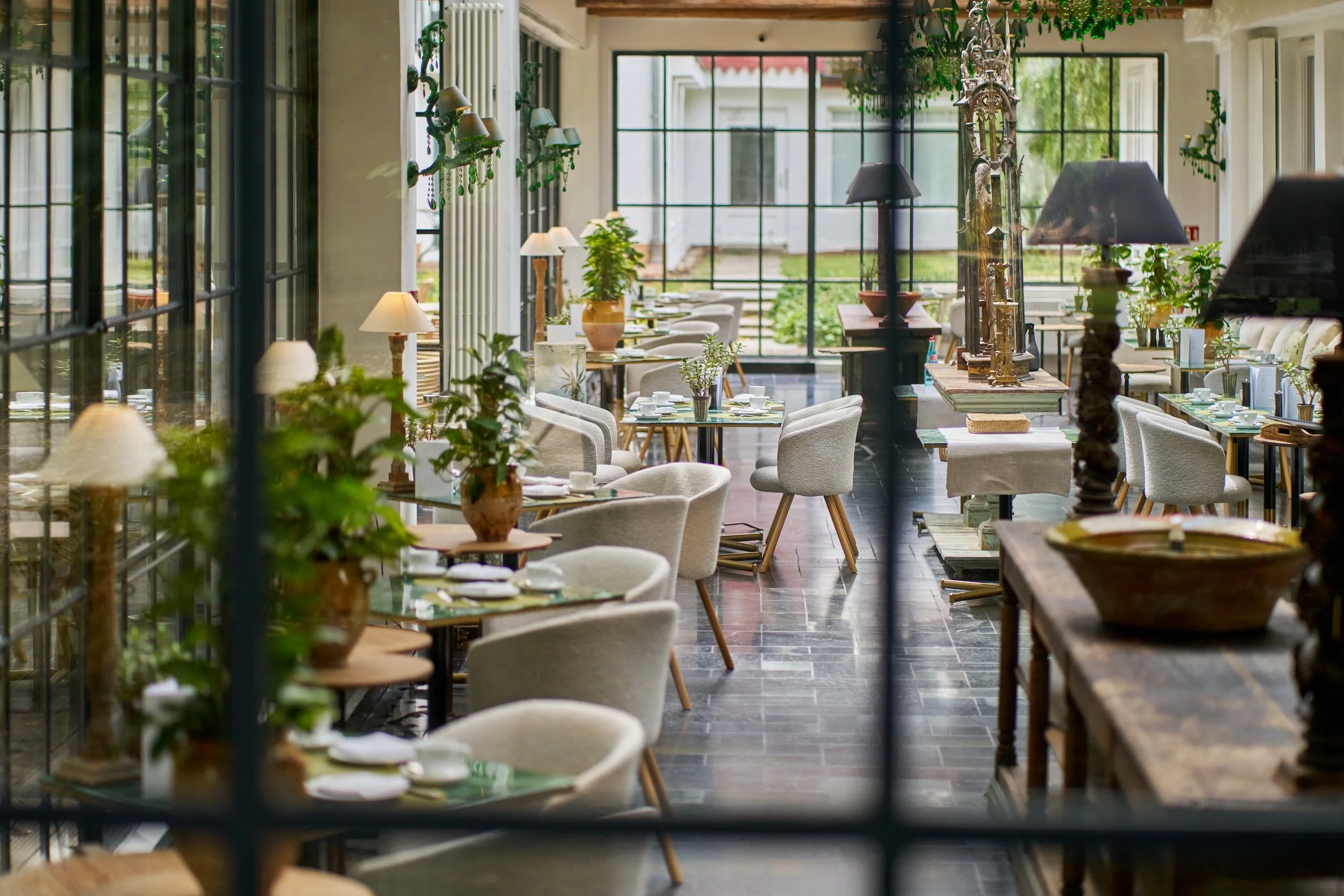
Today, we are at a point where this idea needs to be developed further. Hotels can become cultural magnets. Places that consciously involve the neighborhood and make local identity visible. In my view, this is the next stage of development for hospitality.
"Spaces often subconsciously determine whether we stay, open up, or leave. They influence our mood, our behavior, and the way we interact with other people long before we can rationally perceive or articulate this."
Brandcraft: How can design in hotels influence behavior and create spaces that foster openness, inclusion, and genuine interaction?
Corina Meroth: Design often has a stronger impact than we think. Spaces communicate with us constantly, even without words. They determine whether we stay, interact, or withdraw.
Hotels are all about finely balanced transitions between public and private, closeness and distance, activity and tranquility. Well-designed spaces offer choices and take different needs seriously, regardless of age or background.
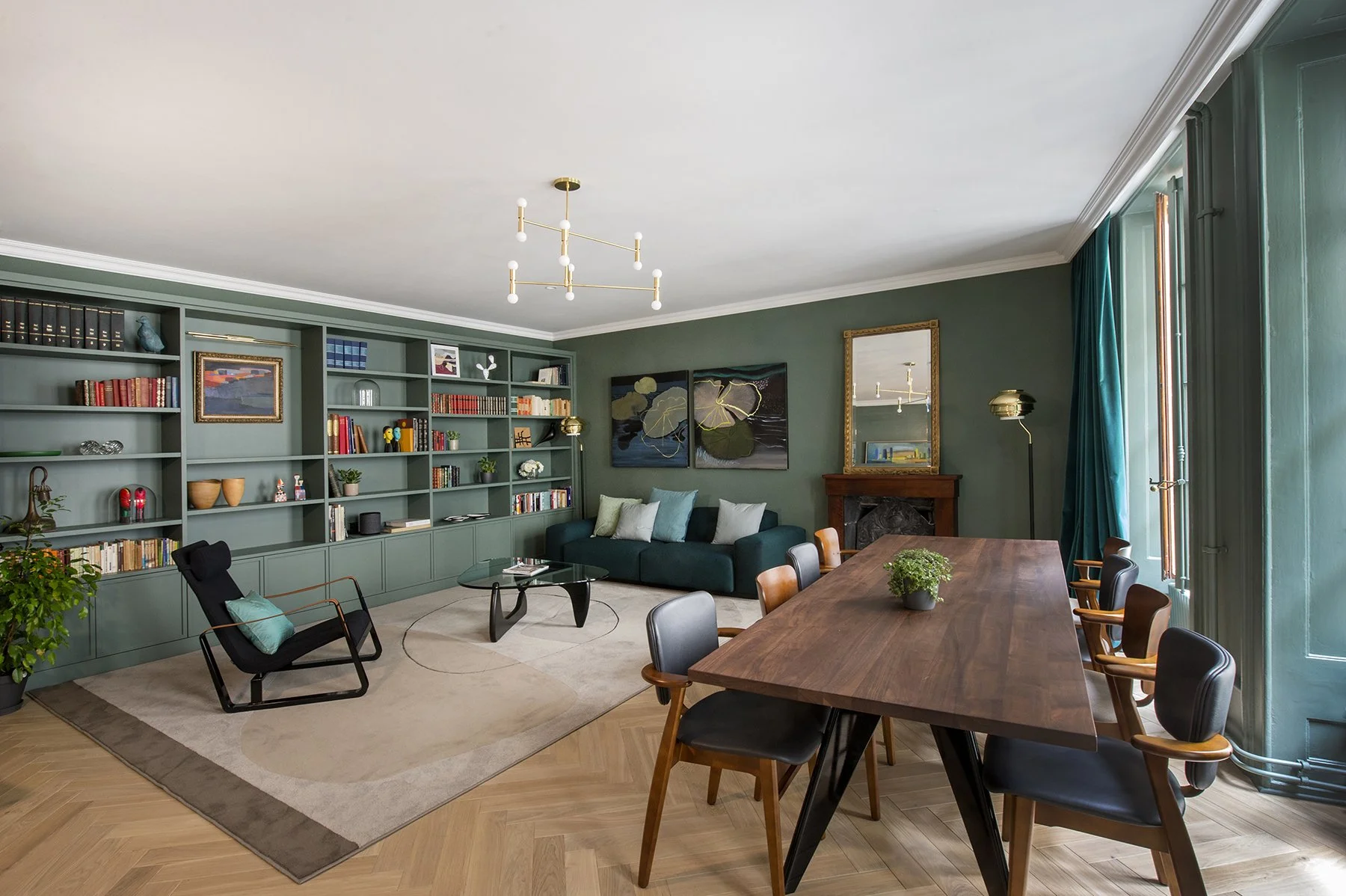
If design is to promote openness, it needs less standardization and more legibility. Furniture, materials, and room structures should be intuitively understandable while allowing freedom. This creates places that enable encounters without forcing them. That is what true hospitality is all about.

Credit Portraits: Dejan Jovanovic
Brandcraft: What responsibility do design brands like Vitra bear today when it comes to ensuring that sustainability is relevant not only from an environmental perspective but also in the long term?
Corina Meroth: We have a dual responsibility. First, we must consistently decarbonize our own value chains and conserve resources. Second, we must offer solutions that enable sustainability without sacrifice.
Around 80 percent of a product's environmental impact is determined during the development phase. Sustainability must therefore not be an afterthought, but an integral part of the design.
For Vitra, this means designing products that can be used, maintained, and repaired for a long time and ultimately returned to the cycle in a meaningful way. Durable products reduce the burden on both the environment and budgets.
At the same time, it is important to make sustainability tangible. When sustainable solutions impress in terms of comfort, aesthetics, and cost-effectiveness, they become the new normal. Sustainability is only relevant if it is ecologically, economically, and culturally viable. This is precisely where design can create this connection.
"The most successful hotels of the future will be designed with people in mind, not space."
Brandcraft: What design and interior trends will have a significant impact on the international hotel industry in the coming years, and why?
Corina Meroth: Modularity, durable materials, and adaptive concepts are becoming increasingly important because they combine economic security with creative freedom. This also changes the decision-making logic. The focus is shifting from the initial investment price to the total cost of ownership.
Hotels are long-term systems. Their quality is not apparent at the time of purchase, but rather over the course of their use and their adaptability. Offers such as Circle for Contract put this approach into practice by integrating reuse and extended product life cycles in an economically viable way.
I am convinced that successful hotel concepts of the future will be consistently designed with people in mind. Not based on square footage, but on experience and long-term value. Profitability remains essential, but hospitality adds an extra dimension. It transforms a transaction into a relationship. That is where the real value lies.