Interview series "5 questions for..."
Florian Montag, VP of Business Development at Apaleo, has been observing how the hotel industry's approach to technology has been changing for years. Between operational pressure and high expectations for AI, he advocates for a sober view: fewer buzzwords, more structure. It's about systems that support, processes that relieve, and AI as a tool rather than a promise. A precise look at an industry in transition—and at the fundamentals that determine its success.
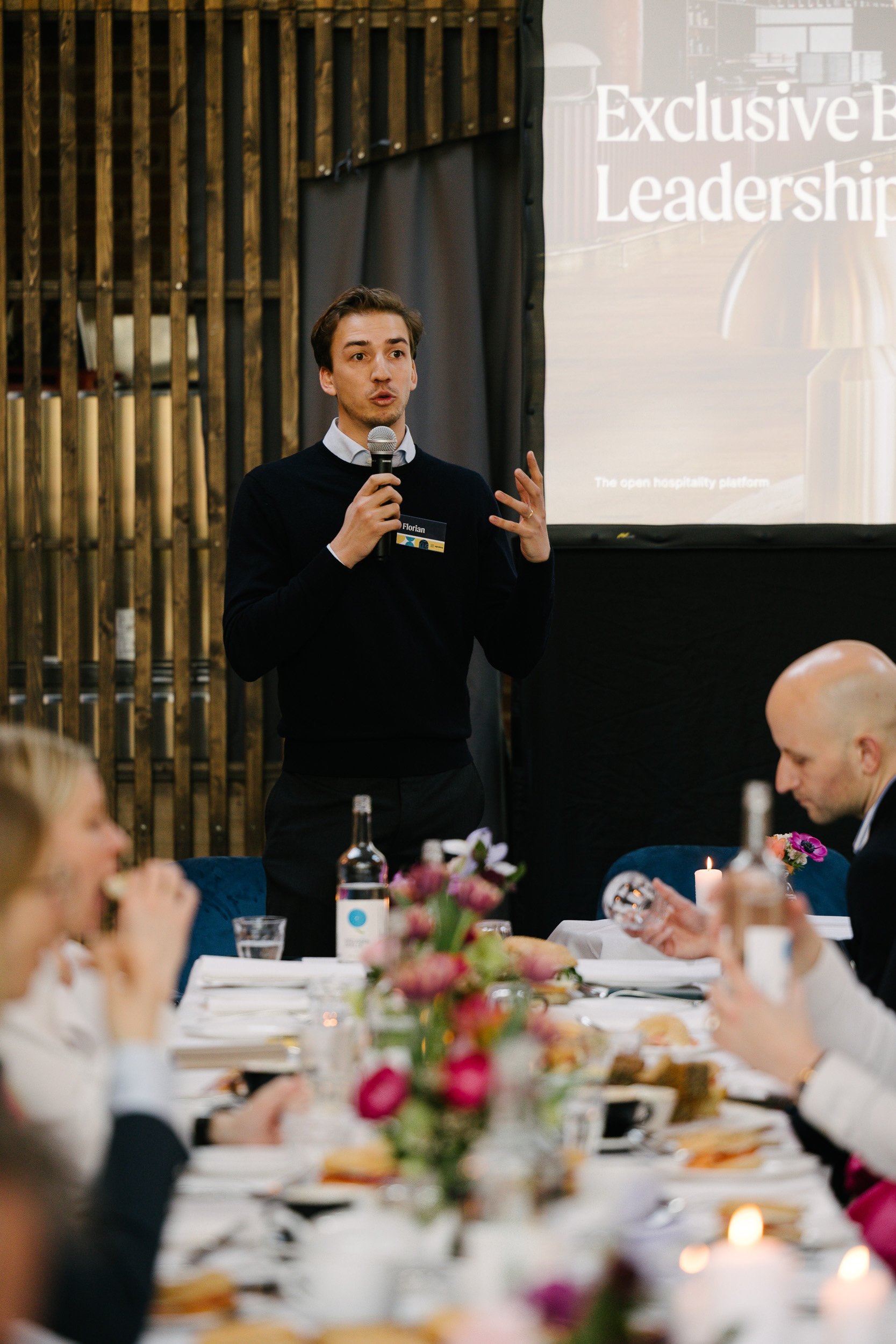
Florian Montag, VP Business Development at Apaleo
Brandcraft: Many hotels are still struggling to use AI strategically. Where do you see the biggest misconceptions right now—and what would be realistic, immediately actionable “quick wins”?
Florian Montag: Many hoteliers are currently facing a real challenge when it comes to AI – and that is completely understandable. Everyday operations are busy, staff are in short supply, and at the same time, there is a perception that AI should be immediately applicable everywhere. Many are therefore using AI very pragmatically today, for example via tools such as ChatGPT, to write texts, clarify questions, or complete individual tasks more quickly. This is not a mistake, but a sensible introduction.
However, a common misconception is the assumption that AI can simply be "laid over any system" and immediate added value can be expected – according to the motto: AI is AI. In practice, it quickly becomes apparent that the benefits depend heavily on how well the underlying systems, data, and processes are set up. If information is incomplete, contradictory, or difficult to access, even the best AI can only help to a limited extent.
At the same time, openness to AI already exists—as does fundamental trust in the technology. What is often lacking is the connection to everyday operations: Where can reliable data be found? In which processes can AI provide meaningful support? And where would relief really make a difference?
This is precisely where the realistic quick wins lie. Instead of viewing AI as a big, abstract topic for the future, it is worth starting small and practical—for example, in guest communication, reporting, or forecasts. It is important not to view these use cases in isolation, but to build them up step by step on a clean system and data basis.
Those who start today to bring order to systems, data, and processes and use AI in a targeted manner where it really provides support are laying the foundation for benefiting from new AI developments more quickly, easily, and cost-effectively in the future.
Brandcraft: How will this new technological mindset change the traditional hotel tech ecosystem and the role of PMS systems over the next five years?
Florian Montag: The role of PMS will change significantly in the coming years. It will be less about bundling as many functions as possible into one system and more about PMS reliably mapping the core blocks of hotel operations—i.e., cleanly managing bookings, stays, payments, and guest data.
New business models, more personalized guest experiences, and increasing automation requirements can hardly be squeezed into rigid standard processes. That is why hotels are increasingly turning to specialized applications—for example, for revenue, guest communication, payments, or back office.
The advent of AI agents is significantly accelerating this development. AI agents can intelligently connect such specialized solutions, map complex processes, and take on tasks partially autonomously. Instead of fixed processes, systems react flexibly to what is currently happening in the business.
For this to work, a PMS is needed as a reliable foundation. It ensures that all operational data is correct and that automation and AI-supported processes can be built on it securely. For hoteliers, this means greater flexibility, faster development of the tech stack, and a system that grows with the requirements of the business.
"The greatest ROI is achieved where AI reduces operational complexity, meets guest expectations faster and better, intelligently connects processes, and relieves the burden on employees."
Brandcraft: In your opinion, which areas of the hotel industry—from guest journey to revenue to housekeeping—will be transformed most quickly by AI, and which use cases are already delivering the greatest ROI today?
Florian Montag: AI currently delivers the fastest added value where it is directly applied to the guest journey and recurring operational processes. The most widespread use today is in guest communication—for example, for inquiries before arrival, during the stay, or after check-out. This is no longer just about automatic responses, but about personalized communication throughout the entire guest journey. The evaluation and response to guest feedback and reviews is also increasingly supported by AI in order to derive targeted operational improvements.
In addition, we see strong effects in areas such as revenue management and housekeeping. Price recommendations can be optimized based on data, and reservation comments or guest requests can be automatically translated into specific tasks for the team. This is where AI noticeably reduces manual work and coordination efforts.
One concrete example is McDreams, where a large part of guest communication and other operational processes are automated with the help of AI. This leads to time savings of around 50% on automated calls in everyday operations and cost savings of around €600,000 per year—while guest satisfaction remains the same or even improves.
Overall, it is clear that the greatest ROI is achieved where AI reduces operational complexity, meets guest expectations faster and better, intelligently connects processes, and reduces the workload on employees. This is precisely why this development is currently progressing so rapidly.

Brandcraft: How is AI changing guest expectations? Will hyper-personalization, dynamic workflows, and automated communication become new differentiators—or simply the new standard?
Florian Montag: AI is fundamentally changing guests' expectations. Guests increasingly expect to receive a suitable answer or recommendation at any time—quickly, relevantly, and tailored to their personal situation. It is becoming less and less important whether this answer comes directly from the hotel or is provided via the guest's personal AI assistant.
This is precisely where an important change is taking place: instead of interacting with each individual app, website, or hotel communication, guests will increasingly use their own digital assistants in the future. These assistants will accompany them throughout their trip, ask questions, make decisions, and coordinate processes—even during their hotel stay. For guests, the assistant will become the central interface, replacing the hotel's individual system.
For hotels, this means a new task. It is no longer just a matter of communicating well themselves, but of ensuring that external assistants have access to accurate, up-to-date, and brand-appropriate information at all times. This is the only way for hotels to remain part of the decision-making and recommendation chain—from in-house services to additional offers.
In the short term, consistent, personalized, and automated communication can still be a distinguishing feature. In the medium to long term, however, it will become standard. Guests will no longer ask whether they will receive answers, but whether their personal assistant will receive the right information and options to optimize their stay.
Brandcraft: Looking ahead: What skills, roles, and structures will hotels need in the future to truly leverage AI—and what should hoteliers invest in now to avoid falling behind in two years?
Florian Montag: To really use AI effectively, hotels need the right combination of people, processes, and technology. It's less about hiring individual AI specialists or building large IT teams and more about laying the right foundations.
On the technological side, this means that systems must be open and modular so that new applications or AI solutions can be easily connected. The cleaner the technical basis, the easier it is to test new technology and put it to productive use.
The processes are just as important. They should be clear, scalable, and aligned with the company's goals—not too complex, but also not rigid. Well-structured processes make it much easier to use AI effectively and leverage automation where it really takes the load off.
And finally, you need the right people. Teams must be open to trying new things, testing things out, and continuously developing them further. With the right architecture and clear processes, it is becoming increasingly possible for "normal" business roles to use AI quickly, pragmatically, and without in-depth technical know-how or budget.
Investing in these fundamentals today creates the conditions for responding to new requirements more quickly, easily, and cost-effectively in the future—instead of having to play catch-up in 12 to 24 months.