
The Hotelmaker: Why Brand Clarity Is More Important Than Any Marketing Budget
Patrick G. Rueff rarely refers to hotels as buildings. To him, they are personalities: cultural places with character, energy, and a clear vision of why people travel in the first place.
For more than three decades, the strategist known as the “Hotelmaker” has been guiding owner-operated hotels on their journey from being interchangeable to becoming relevant. With over 200 award-winning concepts, he combines strategic brand development with a new approach: hybrid hotel marketing.
In an interview with the * Brandcraft * Journal, he explains why mediocrity is disappearing in the digital age, why independent hotels have their greatest opportunity right now, and why genuine brands aren't built by trying to please everyone.
A conversation about courage, brand radicalism, and the future of the independent hotel industry.
About the Person
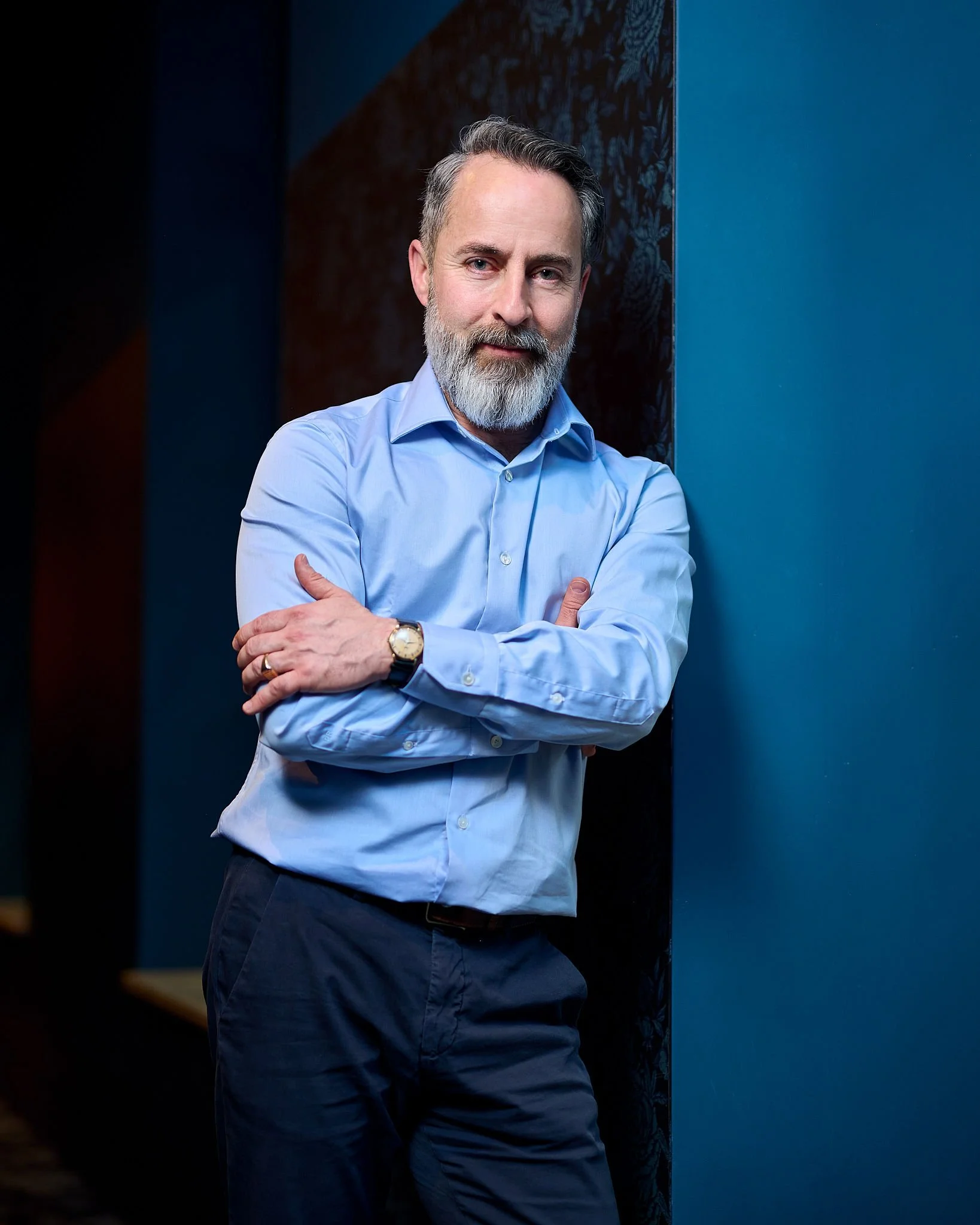
Patrick G. Rueff began his career in the Swiss hotel industry and later founded the Hotelmarketing Group, one of the leading agencies for owner-operated hotels in the DACH region. Using his “Comet Principle,” he developed his own strategic framework for hotel brands. Today, on Hotelmaker.de, he shares his expertise through online courses and masterclasses, accessible to hoteliers of all sizes. His latest book , “Hybrid Hotel Marketing,” is already a classic.
Brandcraft: You've been involved in the industry for over 30 years. Looking back, what has fundamentally changed in hotel marketing, and what has remained surprisingly consistent?
Patrick G. Rueff: When I started out, hotel marketing was primarily about communication. Today, it’s corporate strategy. Back then, all it took was a good location, a listing in a catalog, and solid occupancy rates through tour operators. Visibility was limited, competition was manageable, and change was slow.
Today, every hotel competes in real time with the entire world, all visible on a smartphone screen just a few centimeters wide. The real change, therefore, is not technological but cultural: transparency. Guests are constantly comparing options. Algorithms play a role in these evaluations. Decisions are made more quickly and, at the same time, are driven more by emotion.
What has remained unchanged, however, is this: People don’t travel for the sake of a bed. They travel for meaning, for a feeling they want to experience. The most successful hotels have always been those that knew who they were. The only difference is this: In the past, it was possible to get by without that clarity. Today, that’s no longer the case.
Brandcraft: OTAs, social media, performance marketing, and AI have changed the rules of the game. What does this mean for brand management, and where do you see strategic missteps?
Patrick G. Rueff: We are currently witnessing a paradoxical trend: Never before have so many marketing tools been available, and yet, at the same time, many hotels seem more interchangeable than ever. The reason is simple: people are confusing tools with strategy.
Performance marketing can boost demand, but it cannot create an identity. AI can optimize content, but it cannot develop a stance. And social media can generate attention, but it cannot replace relevance.
The biggest mistake, therefore, is marketing without a brand essence. Many companies invest in visibility before they even know what they actually want to be known for. AI will further amplify this effect. After all, artificial intelligence perfects mediocrity; it reproduces patterns. That is precisely why the human element—character, attitude, and perspective—becomes the decisive differentiator. Today, brand management means, above all else: clarity over activity.
“AI perfects mediocrity. Personality is the key to the future. Those who are replaceable today will become replaceable even faster in the digital age.”
Brandcraft: High-quality hotel products, such as clothing and accessories, are becoming increasingly important. What role do such products play strategically?
Patrick G. Rueff: When a hotel starts selling products, something interesting happens: the brand steps outside its architectural framework. A well-designed product isn’t just a souvenir. It’s a cultural marker. It allows guests to take a piece of the experience back with them into their everyday lives. That’s why the most exciting hotels are increasingly evolving into lifestyle brands. They no longer sell just a stay—they sell a sense of belonging.
Authenticity, however, is what matters most. Products lacking conceptual depth come across as arbitrary. Products with a distinct identity, on the other hand, extend a brand’s story far beyond the customer’s visit. At that moment, marketing suddenly becomes invisible, because the brand itself begins to speak.
Brandcraft: With the Hotelmaker.de platform, you're starting a new chapter. What's the vision behind it?
Patrick G. Rueff: After many years of working at an agency, I realized that the biggest challenge facing the independent hotel industry isn’t a lack of creativity, but a lack of structure. Many hoteliers have great ideas, but no system for implementing them in a sustainable way. Traditional agency models solve individual problems, but they rarely change the way people think.
That’s why Hotelmaker was created as an empowerment platform—an ecosystem of knowledge, methodology, implementation, and coaching that enables hoteliers to take strategic action on their own. At its core is what I call “hybrid hotel marketing”: the combination of human intelligence and artificial intelligence. Humans bring empathy, intuition, and cultural understanding. AI provides analysis, speed, and scalability. I don’t believe in technology without humanity. But I also no longer believe in marketing without technology.
“Brands aren’t created through conformity, but through decision-making. A hotel must know who its guests are—and just as importantly, who they aren’t.”
Brandcraft: Your latest book, *Hybrid Hotel Marketing*, draws on three decades of experience. What key message would you like to convey to the industry?
Patrick G. Rueff: Perhaps this one: Mediocrity used to be acceptable. Today, it goes unnoticed. Many hotels are still trying to meet as many expectations as possible. But brands aren’t built through compromise—they’re built through decision-making. A hotel must know who it’s for—and just as importantly, who it isn’t for.
I’m deliberately phrasing this in a provocative way: the courage to be different. A strong concept reduces marketing pressure, generates media attention, and builds genuine loyalty. In the end, it’s not about marketing. It’s about identity.

Brandcraft Key Takeaways
Brand management begins with clarity about one's own identity, not with activity and visibility
AI perfects mediocrity; personality and attitude remain the key differentiators
Hotel products and accessories are not souvenirs, but cultural markers that foster brand loyalty
Independent hotels succeed not through standardization, but through personal connection, responsiveness, and authenticity
Hybrid hotel marketing combines human intuition with the analytical and scaling power of AI